A race fuel’s job ends in the combustion chamber. The heat it makes doesn’t. More cylinder pressure means more load on the oil, more heat in the cooling system and a car arriving at the braking zone faster than it did last season. That’s why VP’s range grew outward from the tank.
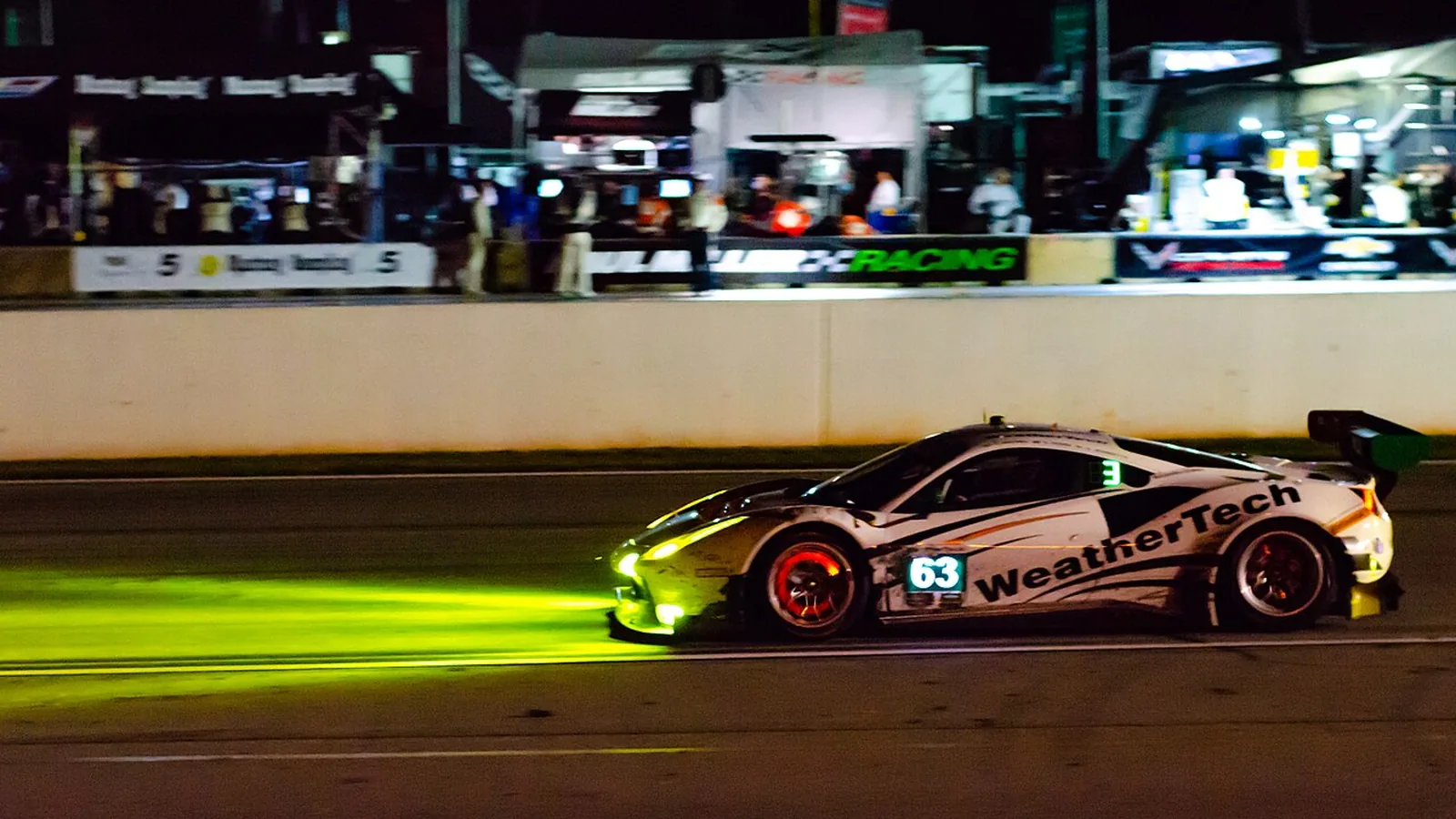
Brake fluid: 622 is the boiling point
Every hard stop pushes heat into the calipers, and the brake fluid carries it. Push long enough and the fluid boils. Liquid doesn’t compress but vapour does, so the pedal goes soft and long, and in the worst case there’s almost no pressure at all. On a hot lap it’s usually the fluid that gives up first, not the pads.
VP named its fluid after its dry boiling point: 328 °C, or 622 °F. The number that matters more is the wet boiling point, measured after the fluid has absorbed 3.7% water, as all brake fluid does in use.
That’s about 49 °C more margin than standard DOT 4 before the pedal starts to fade. Brake fluid still wears out, though: for racing, VP recommends bleeding the whole system with fresh fluid before each event, especially in heat or humidity.
Coolant: part of the tune
Plain water moves heat well, but it corrodes aluminium and forms steam pockets that insulate the hottest metal. Glycol antifreeze fixes freezing and corrosion but transfers heat less well, and many circuits don’t allow it. A cooler engine resists detonation, keeps its oil strong and can take more ignition timing, so coolant is part of the tune.
- Stay Frosty Race Ready is glycol-free and track-safe, with three wetting agents that make the coolant cling to hot metal. VP quotes engine temperatures up to about 17 °C lower, and up to about 44 °C lower at the cylinder heads. It has no freeze protection, so drain or protect the system before frost.
- Stay Frosty Hi-Performance is a propylene-glycol coolant with freeze protection, for performance road cars. VP measured it at up to about 8 °C cooler than traditional glycol coolants.
- Cool Down upgrades the coolant you already have, whether antifreeze or water, by lowering surface tension for better heat transfer. One treatment lasts a year or 48,000 km.
- Frosty Clean flushes the system before you switch, so the new coolant starts clean.
Oil: protection put back
As road oils cut zinc and phosphorus to protect catalytic converters, engines with flat-tappet cams and aggressive valvetrains lost protection. VP’s racing oils, launched in 2016, put it back. They use base oils that cling to metal, several anti-wear chemistries instead of relying on zinc alone, and friction modifiers that free up power.
The 15W-50 is a fully synthetic PAO (Group IV) oil with around 2,000 ppm of zinc, for high-horsepower, high-rpm race engines. For a fresh build there’s a break-in oil to help new parts seat, and an assembly lube.
 622 Racing Brake Fluid500 ml
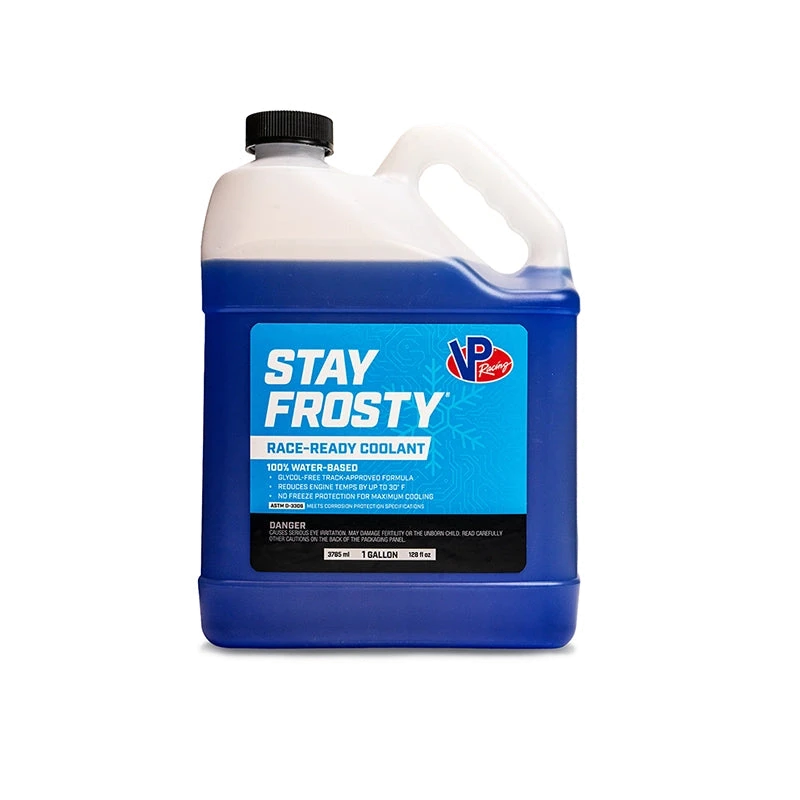 Stay Frosty Race Ready1 gal (3.78 L)
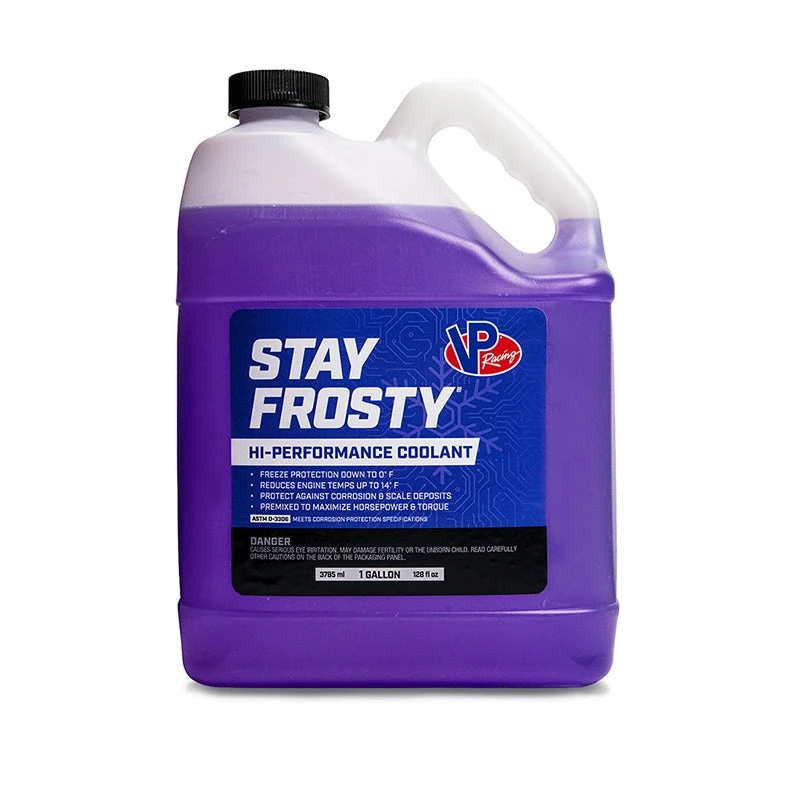 Stay Frosty Hi-Performance1 gal (3.78 L)
 EU Cool Down475 ml
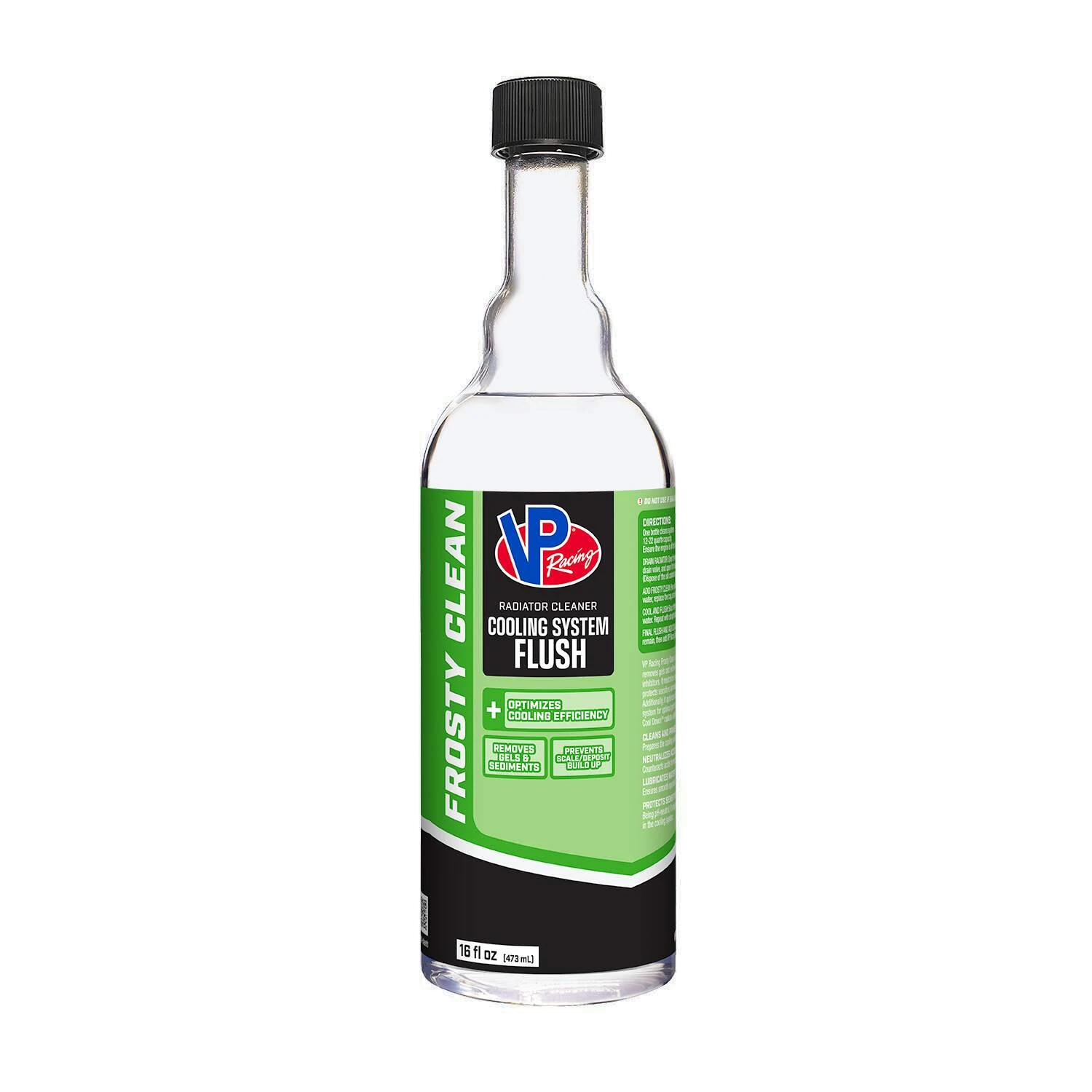 Frosty Clean flush473 ml
 Racing Oil 15W-50946 ml
 Break-In Engine Oil946 ml
 Engine Assembly Lube355 ml
Building or refreshing an engine?
Tell us what you’re building and we’ll put together the fluids for it. info@rallyfuels.com
Oils & lubricantsCoolants